Design for learning
A data journey
Technology works through invisible journeys. Design can turn them into a story everyone can follow.
It starts with a question
Every technical subject hides a question people actually ask. Here it is: “If I send a photo to someone on the other side of the world, what happens between our two phones?” Design starts from that question — not from the architecture diagram. When you begin where people are, technology stops being a wall of jargon and becomes something they can step into.
Make the invisible visible
The journey of a photo is real: it is created, prepared, transmitted, routed, stored in a data centre, processed in the cloud and finally received. None of it can be seen, yet all of it can be told. Turning a sequence of invisible operations into visible steps gives people a thread to hold on to — and a way to place new knowledge along that thread later.
A friendly form opens the door
Pixel art was a deliberate choice. Its playful language says before any word does: this is not reserved for experts. When the form is welcoming, people lean in instead of stepping back — and that is often all it takes for learning to begin.
Two moments of the same story
One question, one journey. The first image invites, the second explains: together they carry the reader from curiosity to understanding.
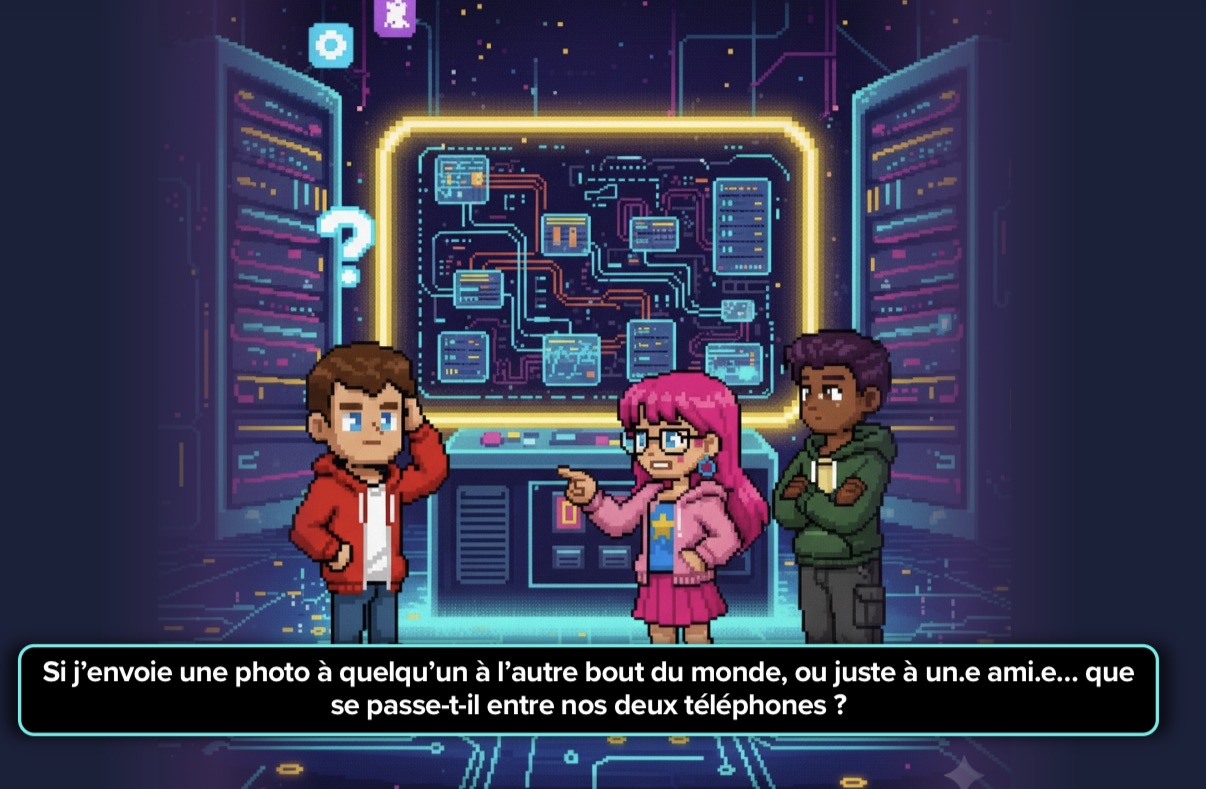
The question
The story opens with the question everyone has already asked themselves, phrased in everyday words. No acronyms, no prerequisites — just a situation the reader recognises instantly and wants to see resolved.
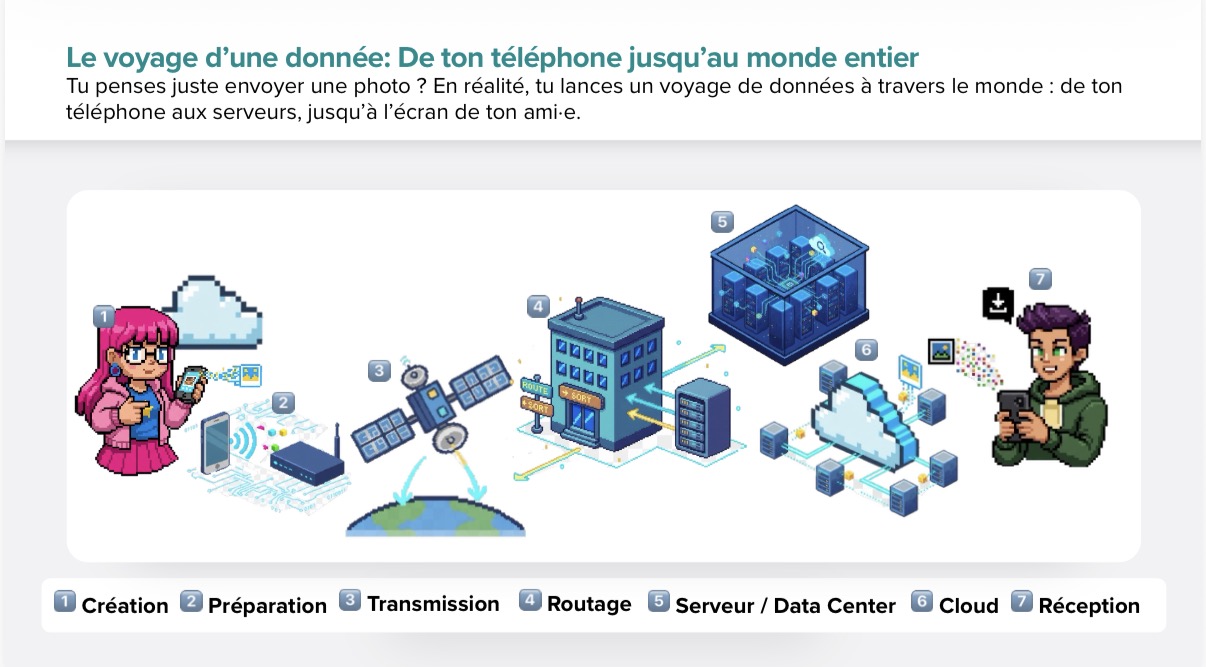
The journey
The answer unfolds in seven steps, each one a small, understandable stage of the journey. The reader can pause at any step, follow the path again, and finally see what really happens between the two phones.