Design for confidence
Complex work, made intuitive
I turn business needs into solutions that help users understand what they need to do and move forward with confidence.
Understand the work before designing the tool
A client describes their needs, processes and constraints. I seek to understand the daily reality of the people who will use the solution: what information they are missing, which tasks take up their time and where they may lose their way. From there, I connect the data, organise the information and design a journey that makes their work easier.
Make the right choices at every step
My creativity comes into play through these decisions: what information to show, how to group it, which actions to make accessible and what can remain in the background. On a Salesforce page, this can mean selecting the essential fields, structuring sections or offering a shortcut to a frequent action. For a more complex process, it can become a guided journey that presents information when it is needed. The goal is to reduce the effort required of the user and help them understand what they are doing.
Design for people and for the long term
I also consider how the solution will be maintained: the technologies used, the data retained, and how it is shared and updated. A coherent organisation can limit duplication, unnecessary transfers and maintenance complexity. This attention to resources is as much a part of my design approach as ease of use.
Two examples of my approach
The visuals below illustrate principles applied in client projects. They use fictional data and do not reproduce confidential interfaces or information.
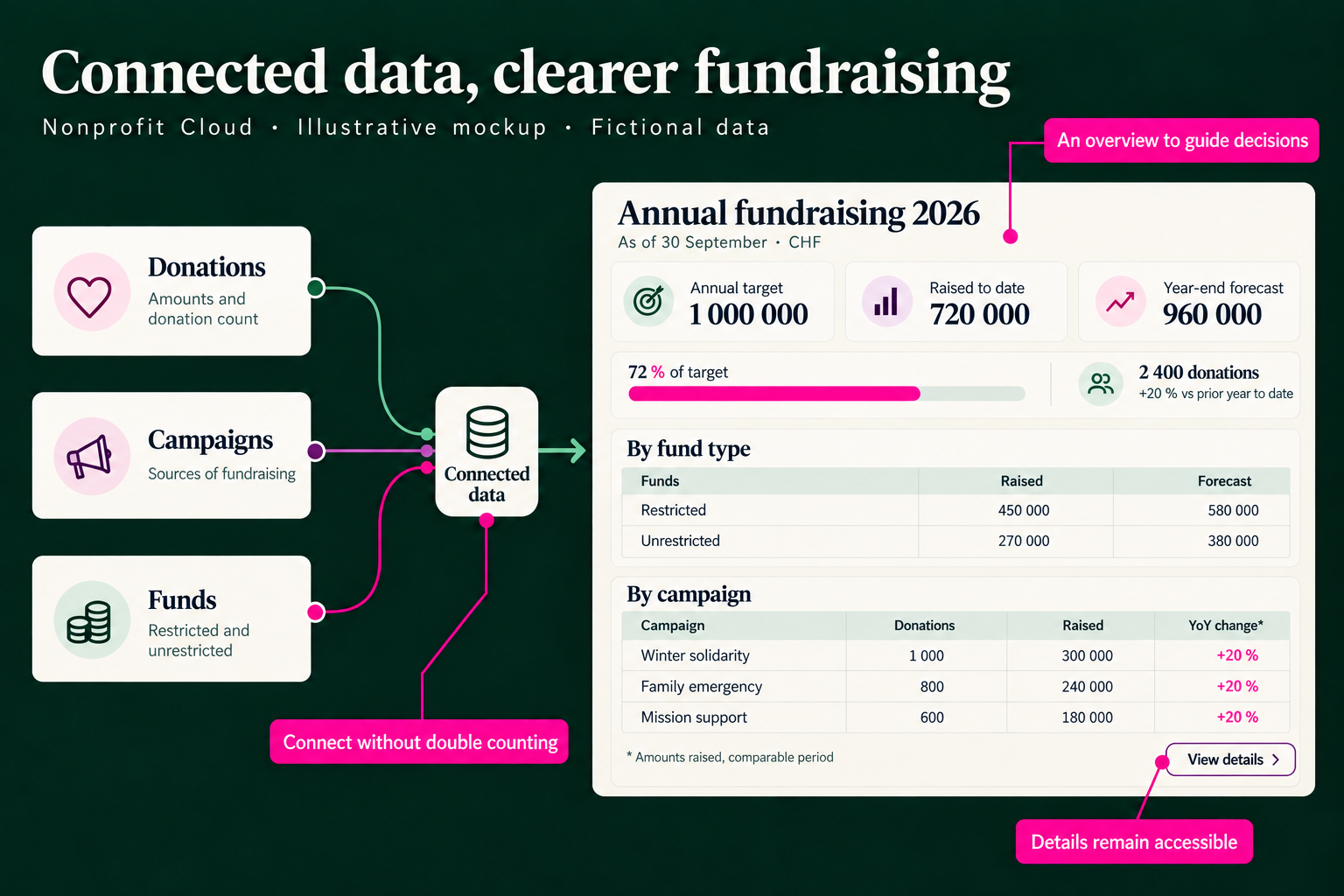
Connect data to inform a decision
A dashboard starts with a business question: what should the person viewing it be able to understand or decide? I work on the relationships between the data, then on its hierarchy on screen. Which measures are essential? Which comparison gives meaning to the result? Which detail should remain accessible without cluttering the main view? Connecting sources makes information available. Organising it makes it useful.
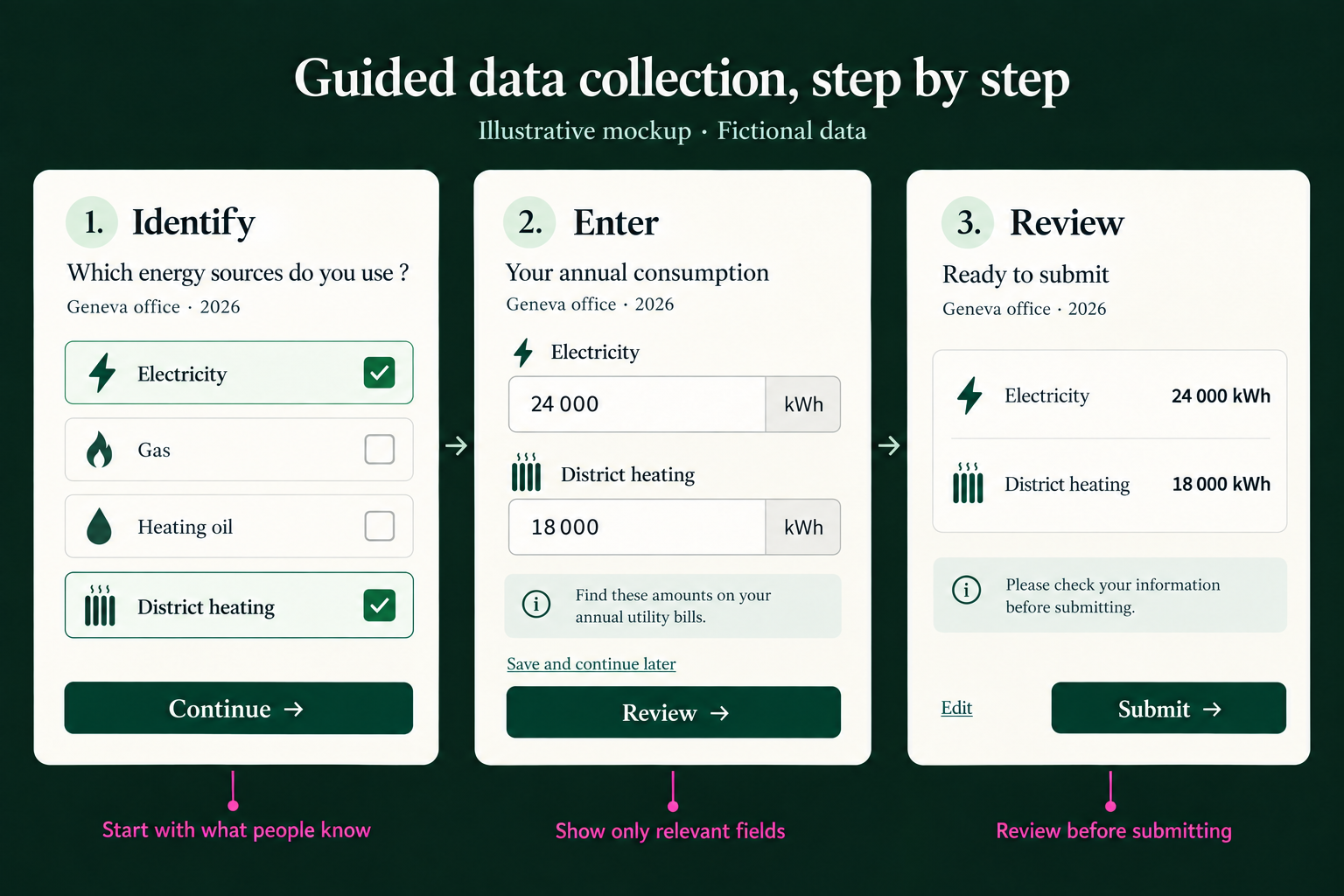
Guide annual data collection, step by step
Employees need to submit energy data for their offices and vehicles. They know their activity; they are not necessarily specialists in sustainability reporting or software. I design the journey around what they know: the energy sources used, the information to find and the data to submit. Questions and steps are organised to guide input and limit irrelevant information. I presented this approach to the Salesforce teams working on the system. They then reused it in their own presentation.